Understanding Wilmington's Tree Ordinance and Protected Species
If you own property in Wilmington, understanding local tree protection laws is essential before removing any trees. The city and New Hanover County have established specific ordinances designed to preserve the natural canopy and protect heritage trees that contribute to the community's character and environmental health. These regulations apply to residential, commercial, and public properties, and violations can result in fines or mandatory replanting requirements.
The primary focus of Wilmington's tree ordinance is the protection of live oak trees, which are considered a critical part of the region's natural heritage. Live oaks are not simply regulated by size; they receive special status because of their ecological importance, longevity, and contribution to the area's distinctive landscape. Before you schedule Tree Removal, it's crucial to determine whether your tree falls under protected species classifications.
Protected Live Oaks in New Hanover County: What You Need to Know
Live oak trees in New Hanover County receive the highest level of protection under local ordinances. Generally, any live oak with a diameter at breast height (DBH) of 24 inches or greater is considered a protected tree and cannot be removed without approval from the city or county. The DBH measurement is taken at 4.5 feet above ground level and represents the tree's trunk diameter. This threshold exists because trees of this size have typically been growing for many decades and provide substantial environmental and aesthetic benefits to the community.
Removing a protected live oak without proper authorization can result in significant penalties, including fines of several hundred dollars per tree and requirements to plant replacement trees. Even if a tree is diseased or poses a safety risk, you must still obtain approval before removal. The city recognizes legitimate reasons for removal, such as documented disease, structural failure, or genuine safety hazards, but these circumstances require professional assessment and documentation.
Do You Need a Tree Removal Permit in Wilmington?
Whether you need a formal tree removal permit Wilmington NC depends on the specific tree species, size, and location on your property. Protected trees always require a permit or approval before removal. However, even trees that don't fall into protected categories may require permits if they exceed certain size thresholds or are located in sensitive environmental areas. The safest approach is to assume that any tree removal on your property may require approval and to verify requirements before proceeding.
Obtaining a permit typically involves submitting an application to the city's Planning and Development Services department, along with information about the tree's location, species, size, and reason for removal. If the tree is protected, you may need to provide documentation from a experienced arborist explaining why removal is necessary. Processing times vary, but permits usually take one to two weeks to obtain. Rather than navigating this process alone, many homeowners find it more efficient to hire a professional tree service that understands the permitting process. Wilmington Tree Service has extensive experience with local tree removal permit requirements and can handle the paperwork on your behalf.
Tree Removal Near Me: When to Call a Professional
Determining whether you need professional help with tree removal requires honest assessment of the tree's size, location, and your experience level. Small trees under 20 feet tall that are not protected species and are located away from structures may be suitable for homeowner removal in some cases. However, most situations benefit from professional expertise. Trees near power lines, structures, fences, or property lines pose significant risks if removal goes wrong. Damaged trees, dead trees, or trees with disease also require professional evaluation to ensure safe removal and prevent disease spread to other trees on your property.
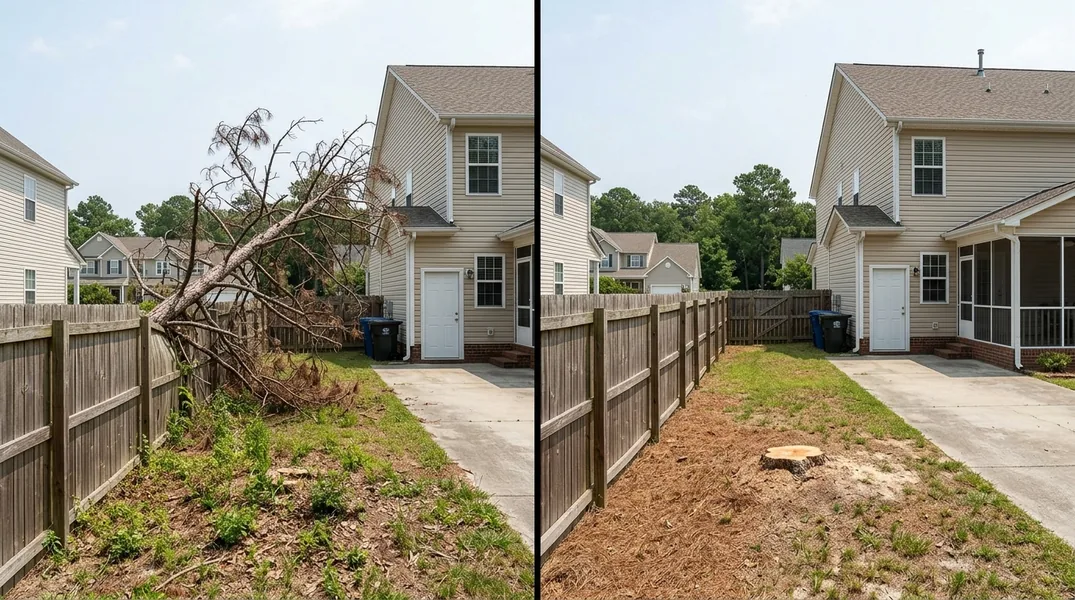
When you contact a professional Tree Removal service in Wilmington, the arborist will assess your tree's condition, confirm whether it's protected under local ordinances, and advise you on the best course of action. If removal is appropriate, the professional can obtain necessary permits and handle the entire process safely. After removal, you may want to consider Stump Grinding to eliminate the remaining root system and restore your yard's appearance. Contact Wilmington Tree Service at (910) 543-2686 to schedule a free estimate and discuss your tree removal needs.
Tree Health and Safety Exceptions to Protected Tree Rules
The Wilmington tree ordinance includes important exceptions for trees that pose genuine safety risks or are severely diseased. If a protected tree is dead, dying, or documented to be diseased beyond recovery, removal may be approved without the same restrictions that apply to healthy trees. Similarly, trees that are structurally compromised, have significant lean, or have major branch failures may qualify for removal based on safety grounds. These exceptions exist because the city recognizes that keeping a dangerous tree standing creates liability and safety hazards for homeowners and their neighbors.
To qualify for a safety or health exception, you typically need professional documentation from a experienced arborist or tree care professional. This documentation should clearly describe the condition, explain why the tree cannot be preserved or treated, and outline the safety risk. Treatment options like Tree Trimming & Pruning or disease management should be considered and documented before removal is requested. Wilmington Tree Service can provide professional assessment and the necessary documentation to support your permit application if your tree qualifies for removal under health or safety provisions.
What to Check Before You Cut: A Homeowner's Checklist
Before removing any tree on your property, work through a simple checklist to ensure compliance with local regulations. First, identify the tree species accurately. If you're uncertain, take a photo of the leaves, bark, and overall shape to a local nursery or arborist for identification. Second, measure the tree's diameter at breast height if it's a species that might be protected. Third, research whether the tree falls under protected categories in New Hanover County. Fourth, check whether the tree is located in a conservation area or near sensitive environmental features. Fifth, determine whether the tree is healthy or compromised, as this affects permit requirements.
Finally, contact the city or county planning department, or better yet, contact a professional tree service that can handle these questions for you. Wilmington Tree Service can answer questions about local tree removal regulations, assess your specific situation, and advise whether a permit is needed. Taking time to verify requirements before you cut prevents costly mistakes and ensures you remain in compliance with local law. If you're ready to move forward with tree removal or have questions about regulations, call (910) 543-2686 or visit our website to request a free estimate.
Looking for a professional tree service contractor in Wilmington? Wilmington Tree Service responds fast for all your tree service needs.
Get a Free QuoteOur services: Tree Removal · Tree Trimming & Pruning · Stump Grinding